


How to Help Anxious Pets: A 2026 Owner's Guide
Table of Contents
- Recognize the Signs of Pet Anxiety Early
- Build a Predictable Routine to Soothe Anxious Pets
- Create a Safe Space and Use Calming Aids
- Use Exercise and Mental Stimulation to Reduce Stress
- Address Separation Anxiety in Pets with Training
- How to Use Interactive Pet Feeders for Anxiety Relief
- Know When to Consult a Veterinarian
- Frequently Asked Questions
Last Updated: September 7, 2026
More than 84% of dogs show at least mild signs of fear or anxiety in everyday situations, according to a 2026 study from Texas A&M University. That statistic reframes what most owners think of as "normal" behavior. For anxious pets, the question isn't whether stress happens, but how you respond to it. This guide from Mac & Ellies pet shop breaks down practical, evidence-based strategies to help your dog or cat feel secure. We'll cover routine, environment, enrichment, and when professional help is the right call.
Recognize the Signs of Pet Anxiety Early
The first step to helping anxious pets is spotting the signals before they escalate into reactive behavior. Common stress indicators include excessive panting, pacing, whining, trembling, drooling, and sudden shedding. Changes in body language, such as a tucked tail, flattened ears, or avoiding eye contact, are equally telling.
Behavioral training can reverse these patterns. In one documented case, Gray House Dog Training used structured methods to help a young Golden Retriever named Carly overcome environmentally stimulated anxiety. The dog learned to manage her fear through consistent, positive reinforcement.
Early intervention matters because chronic anxiety wears on your pet's physical health. As noted by Mountain Veterinary Service, early care lowers stress and helps pets live longer and stay more active.
Build a Predictable Routine to Soothe Anxious Pets
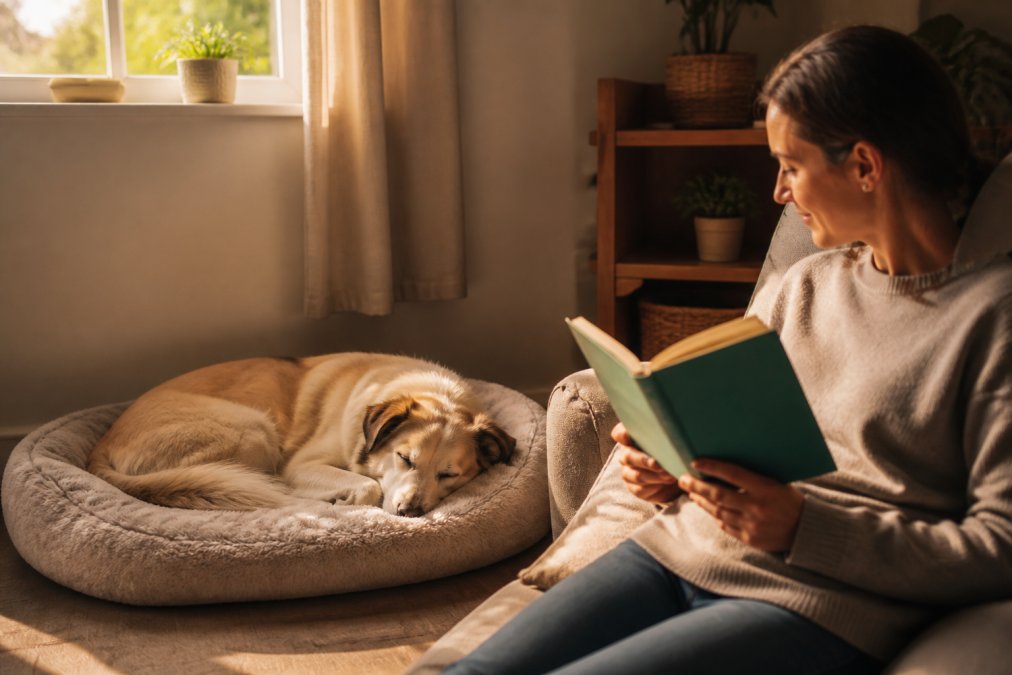
Anxious pets thrive on predictability. A consistent daily schedule for meals, walks, and play reduces uncertainty, which is a primary driver of stress. Routine management signals safety to an animal that otherwise feels on alert.
Set fixed times for feeding and potty breaks, and keep them stable even on weekends. Dogs, in particular, are creatures of habit who read your schedule closely. When life feels chaotic, your calm, repeatable pattern becomes their anchor.
This structure extends to feeding itself. A Mac & Ellies automatic pet feeder can enforce precise meal times even when you are stuck at the office, ensuring your pet's digestive rhythm never depends on your commute.
Create a Safe Space and Use Calming Aids
A safe space only works if it is engineered against your pet's specific triggers. Most owners make the mistake of choosing a room that is quiet but not truly isolated from the sounds that cause fear. Thunder, fireworks, and construction noise travel through walls and windows, so a "quiet" corner often still delivers the full auditory assault.
Start by identifying the trigger. Is it noise, visual stimuli like strangers passing by, or a specific room like the car? For noise-sensitive pets, the safe space should be an interior room with no exterior walls, or a closet. Add mass to the space: heavy curtains, a thick rug, and upholstered furniture absorb sound waves. A white noise machine set to a low, continuous hum masks the unpredictable spikes of thunder or traffic better than music, which has rhythm changes that can startle.
Calming aids work through specific mechanisms, and choosing the right one matters. Pressure wraps, like anxiety jackets, work on the same principle as swaddling an infant: deep, even pressure stimulates the parasympathetic nervous system, lowering heart rate. However, they are most effective for noise phobias and travel anxiety, not for separation anxiety.
Pheromone diffusers release synthetic analogs of the appeasing pheromones that mothers produce to calm their offspring. These are not sedatives; they work gradually to lower baseline stress.
One overlooked angle is your own body language. Pets read your emotional state through your posture, breathing rate, and muscle tension. If you hover over your anxious dog during a storm, speaking in a high, soothing voice, you are actually confirming that danger is present. The most effective owners model calm: they sit quietly, breathe slowly, and avoid eye contact with the pet until the pet initiates contact. This signals that the environment is safe, not that the pet's fear is justified.
For cats, safe spaces are vertical. A high shelf or cat tree with a partial visual barrier gives them a vantage point where they feel in control. Cats prefer to observe a stressor from above rather than hide in a ground-level box, which traps them with no escape route. Place a pheromone diffuser near the cat tree, not in a high-traffic hallway.
A final consideration is the duration of exposure. Do not confine your pet to the safe space for hours after the trigger passes. Allow them to exit on their own terms. Forced confinement after the event can create a new negative association with the space itself, undoing the conditioning work.
Use Exercise and Mental Stimulation to Reduce Stress
Physical activity burns nervous energy, but the type and intensity of exercise must match your pet's breed and individual temperament. A high-energy working breed like a Border Collie or a German Shorthaired Pointer needs 60 to 90 minutes of sustained aerobic activity daily, plus structured mental work. A low-energy breed like a Bulldog or a Shih Tzu may only need 20 to 30 minutes of gentle walking; pushing them harder creates physical stress that mimics anxiety.
The common mistake is treating all exercise as equal. A long, slow walk on a leash does not tire a high-energy dog's brain. What reduces anxiety in these breeds is activities that require problem-solving under physical effort. Agility courses, flirt poles, and fetch with directional commands (left, right, back) combine exertion with cognitive demand. For low-energy breeds, short sniffing sessions of 10 to 15 minutes are often more calming than a forced mile-long walk, because sniffing lowers heart rate and engages the olfactory system directly.
Mental stimulation is not a one-size-fits-all prescription either. The most effective enrichment matches the pet's natural drives. Herding breeds respond to puzzle toys that require chasing or moving objects. Retrievers respond to games that involve finding and carrying. Terriers respond to toys that simulate digging or shaking prey. A generic snuffle mat works for most dogs, but it will not fully engage a breed whose primary drive is sight-based rather than scent-based.
A unique angle that most guides miss is the owner's emotional state during exercise. Dogs, in particular, mirror their owner's arousal level. If you walk your anxious dog while you are tense, gripping the leash tightly, speaking in short bursts, and checking your phone, your dog reads that as a high-alert situation. The walk becomes a stress rehearsal, not a stress release.
To break this pattern, practice what trainers call "neutral walking." Before you step out the door, take five slow breaths. During the walk, keep your shoulders relaxed, your pace steady, and your voice low and infrequent. When your dog looks at you, reward with a calm, quiet treat rather than excited praise. This teaches the dog that the outdoor environment is safe when you are calm.
For cats, mental stimulation requires a different approach. Indoor cats with anxiety benefit from "hunting" routines that mimic the stalk-pounce-eat sequence. Use a wand toy to simulate prey movement for 5 to 10 minutes, then offer a small portion of food immediately after. This completes the natural predatory cycle and releases endorphins that reduce stress. Puzzle feeders that require paw manipulation work well for cats, but they must be introduced gradually; a frustrated cat will abandon the puzzle and become more agitated.
A practical benchmark: most anxious pets need 15 to 20 minutes of structured mental work daily, but this should be split into two sessions, not one marathon. A single long session can overstimulate an already anxious nervous system. Two shorter sessions, one in the morning and one in the evening, maintain a steady baseline of calm without tipping into exhaustion.
Address Separation Anxiety in Pets with Training
Separation anxiety in pets is one of the hardest behaviors to fix because it happens when you are absent. The treatment requires gradual desensitization and counter-conditioning, not just a longer walk before you leave.
Start by practicing short departures of just a few minutes, then slowly increase the duration. Pair your exit with a high-value treat or puzzle toy so your pet associates your leaving with something positive. This process builds tolerance to your absence over weeks, not days.
In some cases, medication supports the training. MWI Animal Health documented a canine separation anxiety case where fluoxetine helped a dog become less anxious and more relaxed in the owner's absence. This illustrates why a veterinary behaviorist should be consulted when training alone stalls.
| Approach | Best For | Time to See Results |
|---|---|---|
| Routine management | Mild daily stress | 1-2 weeks |
| Desensitization training | Separation anxiety | 4-8 weeks |
| Calming aids + enrichment | Noise phobias | Immediate to 2 weeks |
| Veterinary intervention | Severe or persistent anxiety | 2-4 weeks |
How to Use Interactive Pet Feeders for Anxiety Relief
Interactive pet feeders serve a dual purpose: they regulate feeding and they provide mental engagement that distracts from stress. The key is using them strategically rather than simply dispensing food on a timer.
For anxious pets, the feeder becomes a positive anchor. When you leave for work, the feeder dispenses a meal at the exact time your pet expects it, reinforcing the predictable routine that reduces separation anxiety. The video feature on Mac & Ellies automatic feeders lets you check in remotely and even speak to your pet, offering reassurance without reinforcing anxious attention-seeking.
This technology also addresses a common objection about portion control. Rather than free-feeding, which invites grazing and weight gain, scheduled dispensing keeps anxious pets on a healthy rhythm. The mental puzzle of watching food arrive on schedule can itself become a calming ritual.
Know When to Consult a Veterinarian
Most anxiety responds to environmental changes and training, but some cases require professional intervention. If your pet shows persistent signs of fear-based aggression, destructive behavior, or self-harm despite your best efforts, a veterinarian is the next step.
Veterinarians can rule out underlying medical conditions that mimic anxiety and prescribe appropriate treatments. Anti-anxiety medications, when paired with behavior modification, often make training possible for pets too stressed to learn. As VCA Animal Hospitals advises, resisting the urge to overly comfort a stressed pet is important, since excessive coddling may reinforce the anxious state rather than help them regroup.
Frequently Asked Questions
What is the 3-3-3 rule for dogs with anxiety?
The 3-3-3 rule is a guideline for helping rescue dogs adjust to a new home: 3 days of feeling overwhelmed, 3 weeks of settling in, and 3 months of building trust. During the first phase, keep your environment quiet and predictable. By the third month, your dog should feel secure enough to show their true personality. This framework helps anxious pets transition because it sets realistic expectations and prioritizes routine over immediate socialization.
Are there natural ways to help an anxious pet?
Yes. Start with environmental changes like a dedicated safe space and calming music or white noise. Interactive tools, such as a snuffle pad or sniffing mat, provide mental stimulation that lowers stress. A calming jacket that applies gentle pressure can also soothe dogs during storms or travel. These methods work well alongside a consistent daily routine, which gives anxious pets predictability and a sense of control.
How can technology help manage pet anxiety while I am away?
Technology bridges the gap when you cannot be home. An interactive pet feeder with video lets you dispense meals and speak to your pet remotely, which reinforces a consistent feeding schedule and provides comforting audio cues. The predictability of a timed feeder reduces stress for pets with separation anxiety. Pair this with a puzzle toy or snuffle mat to keep your pet mentally occupied during your absence.
When should I consult a veterinarian about my pet's anxiety?
Consult a veterinarian when anxiety disrupts daily life, causes destructive behavior, or leads to self-harm. Signs like constant pacing, excessive drooling, or refusal to eat warrant professional advice. Your vet can rule out medical causes and may recommend a veterinary behaviorist or prescribe anti-anxiety medication. Severe cases need clinical support, not just home remedies.
Helping anxious pets requires patience, observation, and the right tools. Start with the fundamentals of routine and safe space, then layer in enrichment and training. Mac & Ellies pet shop supports you with interactive feeders that maintain feeding schedules remotely and calming apparel that eases situational stress. Explore our collection to find practical solutions that turn a nervous household into a peaceful one.
